
Scott Aniol
Ministry, Worship, Culture, Aesthetics
Publications & Media
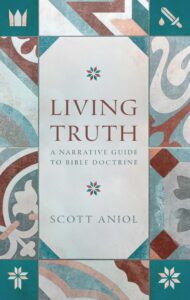
Living Truth: A Narrative Guide to Bible Doctrine presents Christian doctrine by tracing the unified storyline of Scripture around its central theme of God as King. Instead of treating theology as a set of disconnected topics, Scott Aniol shows how the Bible’s teaching unfolds as a coherent narrative, from creation and rebellion through redemption and restoration.
By following God’s reign across redemptive history, the book shows how biblical truth shapes belief, worship, and everyday Christian living. It calls readers both to understand God’s story and to live faithfully within it.
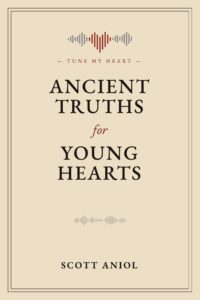
Ancient Truths for Young Hearts is a 52-chapter catechism companion that helps parents and teachers pass on the core doctrines of the Christian faith to children, one truth each week over the course of a year. It is built around the Tune My Heart Catechism and follows the tradition of historic catechisms such as the Heidelberg and Westminster catechisms and those of Baptists like Benjamin Keach and Charles Spurgeon.
Each chapter contains a catechism question and answer to memorize, a note for parents and teachers on the doctrine’s theological significance and how to teach it, child-friendly prose with illustrations and stories, a primary Bible text, a memory verse, and discussion questions.
Why Postmillennialism Is Attractive, but Premillennialism Is Better
In this article on eschatology, Scott Aniol explains why postmillennialism has gained new appeal and argues that premillennialism is the better position. He attributes the recent rise of postmillennialism largely to the development of exegetical arguments that attempt to interpret kingdom prophecy literally, at least in part, and to its emphasis on the importance of earthly work in the present.
Aniol contends that premillennialism does both more consistently, applying a normal, literal hermeneutic to the timing and manner of Christ’s kingdom, and he cautions that an optimism grounded in expectations Scripture does not promise may leave Christians unprepared for persecution. Published in the Detroit Baptist Seminary Journal 30 (2025): 11–31, an issue honoring Bruce Compton.
In this article on victory and worship in the Psalms, Scott Aniol asks what kind of victory Christians should pursue in the present age. Drawing on the canonical shape of the Psalter, he traces four themes: God’s absolute sovereignty, the reality of human rebellion, the promise of a conquering King, and the psalms themselves as the battle cry of God’s people.
Aniol argues that true victory in this age is won not through political or carnal power but spiritually, through worship that forms hearts confident in God’s present reign and the future triumph of his Anointed One. He urges churches to sing the whole Psalter, including lament and imprecation, as a means of forming resilient believers. Published in Pro Pastor 4.1 (2025).
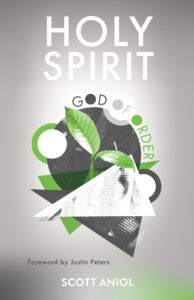
Holy Spirit: God of Order considers how Christians should expect the Holy Spirit to work today. Scott Aniol contends that charismatic views of the Spirit have influenced much of evangelicalism in ways that often go unnoticed, largely because of a lack of clear teaching on who the Spirit is and what his normal work is according to Scripture.
Rather than a general treatment of pneumatology, the book focuses on the Holy Spirit’s work in history. Aniol moves through each major category of the Spirit’s activity in Scripture and assesses its role. He concludes that believers should expect the Spirit to work normally today in ways that bring order and completion to God’s plan and people.
A Higher Kingdom: Pure Worship from a Pure Church
In this article on pure worship and the kingdom of God, Scott Aniol addresses Christians tempted to despair over a declining society by directing them to the higher, heavenly kingdom where God reigns as king and is worshiped in his temple. He traces how God united kingdom and worship in Eden and in Israel, how they became separated after the fall, and how the patriarchs and the exiles lived within common earthly kingdoms while remaining a distinct worshiping community, a pattern the New Testament applies to Christians as sojourners and exiles.
Drawing especially on Hebrews, Ephesians, and 1 Peter, Aniol argues that through Christ and by the Spirit the church now draws near by faith to the worship of heaven, and so must be a holy people offering pure worship regulated by God’s revelation. Published in the Gloria Deo Journal of Theology 3 (2024).
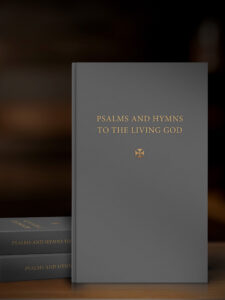
Psalms and Hymns to the Living God is a hymnal for congregational worship published by G3 Press. It aims to gather some of the best congregational songs available in English. It contains metrical versions of all 150 psalms, in 194 settings, together with 282 hymns.
The hymnal is published in a cloth-bound pew edition and a spiral edition. Separately, G3 offers piano accompaniment recordings that match the hymnal’s harmonizations, for use in congregational singing, family worship, or private devotion.

Musing on God’s Music: Forming Hearts of Praise with the Psalms
Musing on God’s Music: Forming Hearts of Praise with the Psalms is Scott Aniol’s study of the book of Psalms, published by G3 Press. It encourages readers to read the Psalms as a unified book from beginning to end rather than selecting favorite psalms in isolation.
Aniol explains the overall themes of the Psalter’s five sections and shows how they build toward a message of hope. He also considers what the Psalms mean for Christians today, including the psalms about Israel and those that call down curses, and why the Psalter matters for believers in the twenty-first century.
Cultural Contextualization in Missions that Accords with Sound Doctrine
In this article on cultural contextualization in missions, Scott Aniol assesses modern contextualization philosophy through the lens of the sufficiency of Scripture. Whereas many contemporary approaches prioritize the preservation of indigenous cultures, at times even encouraging converts to retain Islamic religious practices, he argues that Scripture, not culture, must be the authoritative starting point for cross-cultural gospel communication and ministry.
Aniol develops the thesis by carefully defining “culture” and “contextualization,” examining two New Testament texts often cited in support of modern contextualization (Acts 17:16–34 and 1 Corinthians 9:19–23), and highlighting two theological concepts at stake: human depravity and biblical authority. Published in Pro Pastor 2.1 (Spring 2023), an issue devoted to missions.
Citizens & Exiles: Christian Faithfulness in God's Two Kingdoms
Citizens and Exiles: Christian Faithfulness in God’s Two Kingdoms addresses how Christians should relate to the cultures around them. Christians affirm the goodness of God’s creation and his common grace, yet they also recognize human sin and the world’s hostility to God. Scott Aniol argues that two common responses fall short of Scripture. One weakens the pilgrim character of New Testament Christianity and the church’s spiritual mission of making disciples. The other reduces faith to a private matter.
Aniol shows that the New Testament presents Christians as citizens of the common kingdoms of this world who are ultimately exiles, because they belong more deeply to Christ’s redemptive kingdom. Understanding the relationship between these two kingdoms, he argues, keeps churches focused on their biblical mission while equipping believers to engage actively in society.
Changed from Glory into Glory: The Liturgical Story of the Christian Faith
Changed from Glory into Glory: The Liturgical Story of the Christian Faith traces the history of Christian liturgy and corporate worship. It starts in Old Testament Israel and moves through the early church, the Middle Ages, and the Reformation to the present. Scott Aniol’s thesis is that liturgy forms religion and religion forms liturgy: public worship both reveals what a community believes and shapes the beliefs of those who take part.
Aniol first studies worship in the Old and New Testaments to show how God prescribed worship meant to form his people. He then follows how theological convictions shaped the worship practices Christians have inherited since the New Testament era. His aim is to help church leaders and other Christians choose worship that is consistent with their theological convictions. The book is published by Joshua Press, an imprint of H&E Publishing.
Biblical Ordinances and Visible Signs: How Baptists Weakened Biblical Authority by Limiting Ordinances to Two
This article on Baptist ordinances and sacraments challenges the common claim that limiting the church’s ordinances to two, baptism and the Lord’s Supper, is a historic Baptist distinctive. Scott Aniol shows that seventeenth- and eighteenth-century Baptists listed more than two ordinances for the church and used the term “sacrament” to distinguish baptism and the Supper from the others.
He then identifies when and why Baptist language changed so that “ordinance” replaced “sacrament” and the ordinances were limited to two, and argues that this shift weakened biblical authority among modern Baptists. Published in the Gloria Deo Journal of Theology 1 (2022).
Biblical Foundations of Corporate Worship argues that both the theology and the practice of corporate worship must be grounded in the Word of God. In five chapters, Scott Aniol takes up the old question of how God’s people should properly worship him.
He describes the goal of corporate worship as communion with God through regular, weekly covenant renewal. In this renewal the whole congregation takes part in a dialogue with God, in a service structured around the gospel, aiming at spiritual fellowship with God through Christ by the Spirit.
Let the Little Children Come: Family Worship on Sundays (And the Other Six Days Too)
In Let the Little Children Come: Family Worship on Sundays (And the Other Six Days Too), Scott Aniol argues that children grow best into faithful, mature worshipers of Christ when their parents lead them to Jesus, both in intergenerational church gatherings and in daily worship at home.
Part One gives biblical, theological, and historical reasons for families worshiping together on the Lord’s Day and through the week. It answers common objections and suggests how family worship might be recovered. Part Two gives practical tips and many resources for parents, pastors, and church members, for helping children engage in corporate worship and for leading family worship at home.
In this article on worship music and biblical aesthetics, Scott Aniol argues that because Scripture expresses truth through various poetic and aesthetic forms, the forms God chose to communicate his truth should inform the musical expressions Christians produce today. Grounding his case in verbal-plenary inspiration and drawing on the principle of “fittingness” as articulated by Kevin Vanhoozer and Nicholas Wolterstorff, he shows how the literary features of Scripture offer aesthetic guidance for diverse contemporary worship music.
Aniol concludes that songwriters who wish to reflect the meaning of Scripture faithfully must attend to the correspondence between that meaning and the musical forms they use, extending biblical authority to the aesthetics of worship. Published in the Detroit Baptist Seminary Journal 26 (2021): 103–14.
This sermon on Mark 7:1–13, preached by Scott Aniol at Christ the King on January 10, 2021, in the series “Fundamentals of Worship,” argues that corporate worship must be governed by the authority and sufficiency of Scripture. Aniol uses Jesus’ rebuke of the Pharisees’ traditions to argue that the elements, content, forms, and order of worship should come from God’s Word, and he presents a biblical pattern for worship drawn from Isaiah 6.
In this talk on vocation and calling, Scott Aniol challenges the idea that one can truly serve Christ only through full-time church ministry. Working from Colossians 3 and 1 Corinthians 7:17, he argues that Christians may serve the Lord in every calling, and he applies this to church musicians and artists, encouraging them to do their work heartily as unto the Lord, whether inside or outside the church. The video was published by Artistic Theologian in 2020.
This sermon on Psalm 2, preached by Scott Aniol at Christ the King on August 16, 2020, continues a short series on the opening psalms. Aniol contrasts how the wicked see God’s rule as a burden with the blessing of those who take refuge in the Lord’s anointed King. He draws on Genesis, Israel’s history, and the apostles’ use of Psalm 2 in Acts 4.

Tune My Heart: Bible Narratives Devotional Guide for Individuals or Families
Tune My Heart: Bible Narratives Devotional Guide is a Bible reading guide for personal or family devotions. Over fifty-two five-day weeks, it takes readers through all of the narrative passages of Scripture plus the Psalms and Proverbs, following a chronological reading plan.
Alongside the readings, the guide includes a 52-week catechism, a memory passage for each week, and a hymn of the week. Each day of readings comes with study notes, a short description of the passage, and questions for personal reflection or group discussion.
This video presentation by Scott Aniol, posted by Artistic Theologian in 2020, addresses the Holy Spirit’s work in worship, the subject of his article in the Detroit Baptist Seminary Journal (2019). In that article Aniol challenges the expectation that the Spirit chiefly produces extraordinary experiences in worship, arguing from Scripture’s language for the Spirit’s activity that his ordinary work is disciplined formation.
This video sermon on Psalm 96 asks why God’s people sing in worship. Aniol shows how the psalm’s groups of verbs show that singing blesses the Lord, declares his glory, and expresses deep affections. He also traces the psalm’s movement toward the future reign of the Lord over all nations and creation, arguing that singing it shapes believers to live in light of that coming reality. This 2020 recording is separate from Aniol’s 2018 sermon on the same psalm.
In this conference session on planning a gospel-shaped worship service, Scott Aniol, then at Southwestern Baptist Theological Seminary, speaks to music ministers and worship leaders about how to order corporate worship. Drawing on 1 Corinthians 14 and Old Testament patterns of drawing near to God, he argues that services should be orderly and edifying, and that a service shaped to represent the gospel forms worshipers to live out the gospel. The video was published by Artistic Theologian in 2020.
This sermon on Psalm 11, preached by Scott Aniol at Christ the King on August 23, 2020, asks how the righteous should respond when society’s moral foundations seem to be crumbling. Drawing on the surrounding laments in Psalms 10–14, Aniol urges believers not to flee but to take refuge in the Lord, trusting that he still reigns and will judge rightly, and points to Christ as the anointed King.
This video records Scott Aniol’s presentation on “fittingness” as a guide for biblically informed worship music, prepared for the national meeting of the Evangelical Theological Society and given at the Southwestern Seminary Worship Colloquium. Aniol argues that because Scripture communicates truth through particular aesthetic forms, those forms should inform the musical expressions Christians create for worship.
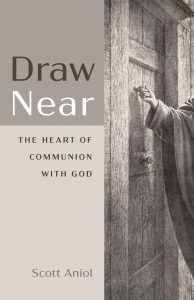
In Draw Near: The Heart of Communion with God, Scott Aniol takes up what Scripture means by communion with God. He contrasts it with popular notions that treat it as mystical experience, emotional ecstasy, centering rituals, or hearing audible voices.
Through a series of meditations on several biblical passages, Aniol argues that communion with God is neither mystical nor mysterious. It is rooted in the gospel of Jesus Christ, clearly revealed throughout Scripture, and essential to a fruitful Christian life that brings glory to God.
A video recording of Scott Aniol’s paper “Changed from Glory into Glory: The Liturgical Formation of the Christian Faith,” presented in the Practical Theology/Spiritual Formation section of the 2019 national meeting of the Evangelical Theological Society and posted by Artistic Theologian in 2020.
This sermon on Psalm 1, preached by Scott Aniol at Christ the King on August 9, 2020, opens a short series on the Psalms about life amid cultural upheaval. Aniol notes how the Psalter moves from lament to praise and contrasts the apparent prosperity of the wicked with the lasting blessedness of those who delight in and meditate on God’s Word.
In this article on the theology of Christian worship in the book of Hebrews, Scott Aniol addresses a long-debated question: how Christ’s coming, life, death, and resurrection changed the worship of Old Testament Israel. Noting errors on both sides, from rejecting any Old Testament influence on Christian worship to copying Jewish worship in detail, he presents Hebrews as the New Testament’s fullest answer, with Hebrews 12:18–29 as a key to its argument.
Aniol argues that while New Testament worship is rooted in Old Testament revelation, worship through Jesus Christ is superior to that of Judaism because it enables Christians to worship spiritually in the heavenly temple itself. Published in the Journal of the Institute of Reformed Baptist Studies 6 (2019).
This article examines worship as both a divider and a unifier among Protestants, comparing the Reformation with contemporary evangelicalism. Scott Aniol shows that differences over worship philosophy and practice, such as the Lord’s Table, baptism, and how Scripture regulates worship, were central in preventing full unity among sixteenth-century Reformers even though they shared core theological convictions, while traditional psalmody, hymnody, and liturgy fostered appropriate unity across denominational lines.
He argues that contemporary evangelicalism blurs important denominational distinctives through the Praise and Worship and Church Growth movements, whose theologies tend to minimize doctrinal matters, partly by making musical style central to church identity. Published in the Journal of Ministry and Theology (Fall 2019).
This article on the Holy Spirit’s work in worship assesses the common evangelical expectation that the Spirit’s presence will produce extraordinary experiences that too much form and order would “quench.” Scott Aniol traces this expectation to the Pentecostal movement and notes its spread into evangelical churches that hold a cessationist theology.
He then examines the language Scripture uses for the Holy Spirit’s actions, showing that the Spirit’s usual work is to bring God’s plan to order, and studies the New Testament passages on the Spirit in worship. Aniol concludes that the Spirit’s ordinary work in worship is disciplined formation. Published in the Detroit Baptist Seminary Journal 24 (2019): 81–95.
In this sermon on Psalm 78, Scott Aniol addresses hope for families seeking to follow the Lord in the world. He explains the psalm’s contrast between the tribes of Ephraim and Judah and urges parents to tell their children the works of the Lord, to call them to repentance and faith in Christ, to protect them from pagan influences, and to shape their hearts through faithful family and congregational worship so that they set their hope in God. The video was posted by Providence Baptist Chapel in 2019.
This audio recording of Scott Aniol’s lecture “Was Isaac Watts Unitarian?” comes from the 2018 Metropolitan Tabernacle School of Theology in London. Addressing charges that Watts was unorthodox on the Trinity, Aniol weighs where Watts left himself open to criticism alongside his commitment to the Trinity. The lecture draws on his article in the Detroit Baptist Seminary Journal (2017).
This audio recording presents Scott Aniol’s address on the regulative principle and hymnody, given on October 20, 2018, at the Reformation Worship Conference hosted by Midway Presbyterian Church in Powder Springs, Georgia.
This audio recording presents Scott Aniol’s address on the last half century of worship music, given on October 19, 2018, at the Reformation Worship Conference hosted by Midway Presbyterian Church in Powder Springs, Georgia.
This sermon on 1 Corinthians 12:12–26, preached by Scott Aniol at Christ the King on October 14, 2018, considers the diversity and unity of the body of Christ. It was part of a fall series on the church’s priorities and addresses the members’ ministry to one another.
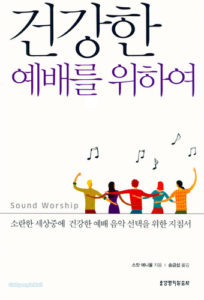
Korean translation of Sound Worship, translated by Dr. Tom Song and published in South Korea.
This sermon on Psalm 96, preached by Scott Aniol at Christ the King on July 29, 2018, examines the psalm as a call to sing in corporate worship. Aniol argues that singing expresses the heart’s affections in response to God’s worthiness and works, and that it shapes believers to live in light of future realities, especially the Lord’s coming to judge and reign. He connects the “new song” to the songs of the redeemed in Revelation.
In this lecture, Scott Aniol compares the errors in medieval worship that the Protestant Reformers rejected, such as sacramentalism, with similar ideas he sees returning in some contemporary and charismatic worship, including the view of music as a means of experiencing God’s manifest presence. He proposes a common solution in the regulative principle of worship and the teaching of Hebrews that believers draw near to God by faith. The video was published by Artistic Theologian in 2018.
An audio recording of Scott Aniol’s session “Citizens and Exiles: Christians, the Church, and Culture,” given at the 2018 Knowing, Loving, and Ministering conference on the substance of conservative Christianity, hosted by Religious Affections Ministries.
A video recording of “Citizens and Exiles,” a lecture by Scott Aniol at the Metropolitan Tabernacle Theology Conference in London (2018).